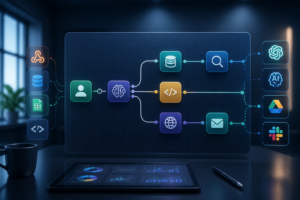
Deploying custom AI agents for business applications represents a fundamental shift from simple task automation to dynamic, goal-driven operational execution. This comprehensive guide provides enterprise decision-makers, CTOs, and automation architects with an exhaustive blueprint for evaluating, scoping, building, and scaling
Scheduling content in WordPress is a foundational publishing requirement for content creators, newsrooms, digital marketing agencies, and enterprise site operators. While native mechanisms make it simple to schedule WordPress posts in both the Block Editor (Gutenberg) and Classic Editor, underlying
This technical Gemini Flash review evaluates Google’s lightweight, high-speed multimodal AI model family for enterprise automation, developer workflows, and agentic pipelines. We analyze architectural innovations including distilled MoE, native audio/video processing, context caching mechanics, and real-world Time-To-First-Byte (TTFB) metrics against
Selecting the optimal WooCommerce automation plugin requires evaluating native WordPress architecture against store throughput, database impact, and operational requirements. This comprehensive guide reviews leading WordPress-native automation solutions, including AutomateWoo, Uncanny Automator, FunnelKit Automator, FlowMattic, and SureTriggers. We examine the technical
Evaluating the complete commercial model of Google Antigravity requires understanding its dual nature: from free tiers and API token billing to enterprise credit limits and multi-agent resource usage. This deep-dive guide analyzes the exact pricing structure, context window token math,
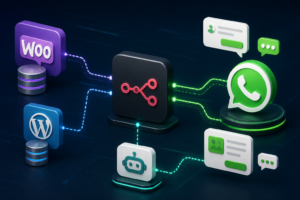
Master enterprise messaging automation with our production-ready n8n workflow templates for WhatsApp Business API integration. This comprehensive technical blueprint provides step-by-step procedures for configuring the Meta Cloud API, building robust webhook handlers, and orchestrating automated outbound order notifications for WooCommerce.
Modern business operations demand more than rigid deterministic scripts; they require adaptive systems capable of resolving multi-system data discrepancies, handling unstructured document payloads, and orchestrating complex cross-platform workflows. A business operations AI agent bridges the critical gap between traditional Robotic
The Google Antigravity Agent Manager provides developer teams with a robust runtime environment for orchestrating autonomous, multi-agent AI systems. While standard terminal interfaces handle isolated prompting, the agent manager introduces structured process supervision, multi-agent orchestration via declarative agents.md files, and
Selecting the best ai agent tools no code visual platforms requires understanding the fundamental differences between simple task automation and true agentic orchestration. Modern visual platforms enable business automators, operations teams, and non-developer architects to build autonomous, multi-tool AI agents
Welcome to the official Advanced Workflows workflow automation blog, your comprehensive digital library for actionable technical tutorials, enterprise integration strategies, and step-by-step development guides. In modern digital infrastructure, standard manual operations, disjointed software stacks, and repetitive data entry present significant bottlenecks to growth. Modern teams, software engineers, ecommerce operations leads, and technical founders require robust systems that seamlessly pass data between applications, eliminate administrative overhead, and harness artificial intelligence. Our educational resources are written specifically to bridge the gap between high-level architectural theory and practical hands-on execution.
Whether you are implementing complex event-driven pipelines, building custom API connections, customizing digital commerce environments, or exploring the frontier of autonomous agent workflows, this blog acts as your primary Knowledge Base. Within these articles, you will find rigorously tested methods, structural diagrams, production-ready code snippets, and structural blueprints tailored for technical professionals. If you are looking to enhance your artificial intelligence stack immediately, feel free to visit our dedicated AI Tools directory, or explore practical tools and digital assets in our online Shop. For custom engineering consultation, you can always reach out directly through our Contact Us page.
Understanding the Scope of Modern Workflow Automation
Modern business operations rely on dozens of specialized Software-as-a-Service (SaaS) tools, databases, custom backends, and communication platforms. When these disparate systems operate in isolation, organizations experience data fragmentation, manual transfer errors, slower response times, and ballooning labor costs. Modern workflow automation solves these systemic inefficiencies by establishing structured data pathways, event listeners, and automated triggers across software boundaries.
Rather than viewing individual automation scripts as isolated patches, modern technical teams treat business process automation as an interconnected framework. This framework connects front-facing user interactions—such as web form submissions, ecommerce purchases, or support tickets—directly with backend processing pipelines, inventory databases, customer relationship management (CRM) systems, and real-time reporting dashboards. By leveraging open-source orchestration engines, standardized application programming interfaces (APIs), and headless backend architecture, organizations gain unprecedented agility and control over their technical operations.
Our educational content approaches workflow engineering with a focus on durability, security, and scalability. Throughout our articles, we dissect real-world operational challenges and present clean, modular solutions that technical teams can deploy with confidence. From small startups streamlining lead routing to enterprise operations scaling web application data pipelines, the methodologies shared on this platform reflect real-world implementation experience.
Core Categories Covered in Our Workflow Automation Blog
To help you navigate our growing archive of engineering guides, technical tutorials, and strategic breakdowns, our articles are organized into distinct core topic areas. Each category addresses specific challenges within the modern software integration landscape.
n8n Workflow Automation & Integration Guides
Open-source and fair-code workflow tools have transformed how engineers build automation pipelines. A major focus of our publication centers on n8n workflow automation. Through detailed n8n tutorials and practical architectural guides, we show developers and technical teams how to design, self-host, secure, and scale node-based automation platforms.
Our articles cover everything from fundamental node configurations to advanced HTTP Request nodes, custom JavaScript/TypeScript code execution, and dynamic data expression parsing. We demonstrate how to replace proprietary SaaS integration software with self-hosted instances that keep sensitive data within your secure infrastructure. Additionally, we showcase how engineers can utilize pre-configured n8n workflow templates to deploy complex logic—such as asynchronous multi-step webhooks, error notification triggers, and multi-tenant data pipelines—in a fraction of the traditional development timeframe. For detailed syntax and official node references, engineers can consult the official n8n documentation alongside our practical implementation tutorials.
Business Process Automation Strategies
Beyond individual software workflows, organizations require overarching strategies for end-to-end business process automation. Technical automation is most powerful when it directly targets high-friction operational workflows across departments like sales, marketing, finance, fulfillment, and customer success.
Our business process automation guides analyze process mapping techniques, state machine architectures, idempotent transaction design, and failure management systems. We examine how to convert manual multi-step business procedures into deterministic, machine-readable workflows. By reading these articles, operations leads and solution architects learn how to reduce manual processing latency, maintain audit-ready logging records, and establish reliable exception handling when external third-party services experience downtime or API throttling.
AI Tools Development & API Integration
The convergence of large language models (LLMs), neural networks, and traditional backend workflows has opened a new operational frontier: AI automation. Integrating artificial intelligence into enterprise operations requires far more than pasting basic prompts into a chat window. It demands robust programmatic API integration, context management, vector store indexing, and structured payload processing.
In our technical guides, we explore how to seamlessly incorporate cutting-edge AI tools into existing operational pipelines. We demonstrate how to handle API calls to external language model endpoints, parse structured JSON outputs using schema enforcement, manage token consumption costs, and feed real-time organizational context into autonomous retrieval-augmented generation (RAG) pipelines. To discover curated tools and software options that plug directly into these workflows, check out our dedicated AI Tools directory page.
WordPress & WooCommerce Development
Content management systems and digital storefronts remain core touchpoints for digital commerce and corporate operations. Our site features comprehensive WordPress tutorials and WooCommerce customization guides designed for full-stack developers, ecommerce engineers, and agency technical directors.
These guides go beyond basic plugin recommendations, delving deep into custom PHP action and filter hooks, REST API endpoint customization, database query optimization, and webhook event publishing. We show you how to connect your online store directly to external order processing systems, enterprise resource planning (ERP) solutions, inventory synchronization tools, and automated fulfillment networks. For official platform architectural references, developers can review the official WordPress documentation alongside our technical integration articles.
Google Antigravity Workflows & Resources
As technological platforms evolve, technical teams must keep pace with emerging cloud architectures, novel development kits, and specialized tools. Our publication covers Google Antigravity technologies and Google Antigravity workflows when relevant, providing practical context, resource analyses, and practical development insights.
In these dedicated guides, we explain how developers can incorporate novel platform paradigms, modern script orchestrations, and specialized developer tooling into their existing workflow automation setups. We focus strictly on verified capabilities, interface integration strategies, and practical application patterns so technical teams can assess, implement, and leverage these resources efficiently.
AI Development Tools & Emerging Tech
Building high-performance autonomous systems requires modern specialized software tools. Our AI development tutorials highlight emerging software engineering platforms, dynamic agent orchestration frameworks, prompt evaluation systems, and vector database management solutions.
These technical articles help software developers, data engineers, and AI enthusiasts learn how to build agentic pipelines capable of executing complex multi-step reasoning tasks. We cover standard RESTful API connections, authentication security protocols, model fine-tuning data pipelines, and real-time webhook responses. By keeping track of these modern AI development tools, developers can build scalable applications ready for future technical demands.
Technical Architecture and Best Practices for Automation
Designing durable systems requires adhering to proven software engineering fundamentals. An automation script that functions perfectly during local testing can quickly break in production if it lacks robust error handling, concurrency limits, or proper payload validation. Our content consistently emphasizes architectural best practices to ensure your enterprise processes run smoothly 24/7/365.
Architectural Pillar
Common Production Risk
Engineering Solution
Idempotency
Duplicate transactions caused by webhooks retrying upon temporary network timeouts.
Implement unique transaction keys and atomic database verification prior to task execution.
Error Handling
Silent pipeline failure leading to lost customer data or missed order fulfillment events.
Malformed JSON payloads breaking downstream database insertions and external API updates.
Enforce strictly typed schema validation using JSON Schema, TypeScript types, or robust mapping nodes.
When engineering multi-system workflows, webhooks serve as the standard mechanism for real-time, event-driven data transfer. Rather than relying on inefficient database polling—which wastes server CPU power and introduces unnecessary network latency—event triggers immediately push JSON payloads to designated receiving endpoints. For comprehensive guidance on building custom RESTful receivers, developers can examine the WordPress REST API developer handbook along with our step-by-step backend guides.
Security is another critical pillar discussed extensively across our blog articles. Storing API credentials in plain text inside automation nodes creates severe vulnerabilities. We regularly illustrate how to manage environment variables securely, configure OAuth 2.0 authentication flows, enforce principle-of-least-privilege access rules, and encrypt sensitive data payloads both in transit and at rest.
Practical Use Cases Across Teams and Industries
To demonstrate the real-world value of technical automation, our workflow automation blog features practical implementation scenarios across diverse operational domains. These use cases show exactly how developers, agencies, and business leads translate architectural strategies into immediate productivity gains.
Ecommerce Store Synchronization: Automatically capture new order webhooks from platform checkouts, transform customer details, verify address data against validation APIs, and trigger immediate order creation within third-party logistics (3PL) fulfillment dashboards.
Automated Customer Support Routing: Process inbound support emails using natural language processing tools, categorize incoming tickets by urgency and intent, append historical order details from database endpoints, and route complete context cards to designated customer support teams.
Lead Enrichment and CRM Pipeline Execution: Intercept new web form submission events, query third-party enrichment APIs to gather firmographic data, evaluate lead scoring thresholds dynamically using conditional logic, and populate high-priority leads directly into CRM pipelines with real-time team notification alerts.
Automated Digital Content Publishing Pipelines: Build multi-stage publishing workflows that automatically compile technical documentation updates, parse markdown formatting, generate social media draft previews, run automated proofreading checks via specialized AI tools, and queue posts across content networks.
Financial Invoice and Expense Processing: Extract incoming invoice PDFs from email attachments, run optical character recognition (OCR) and parsing models to extract line items, map amounts to chart-of-accounts structures, and generate pending approval bills within cloud accounting platforms.
Implementing these automated workflows significantly reduces processing cycles, minimizes human error, and frees up operational bandwidth so your engineers and team members can focus on core development priorities rather than repetitive maintenance tasks.
How to Implement Ideas from Our Guides
To maximize the technical value of our blog resources, we recommend a structured approach when implementing the code snippets, architectural designs, and workflow examples provided in our tutorials:
Audit Your Existing Process: Map out your current manual step-by-step procedures before writing code or building nodes. Identify all data inputs, third-party software endpoints, transformational logic requirements, and potential edge cases.
Set Up a Staging Environment: Never deploy unverified workflow scripts or custom hooks directly to production environments. Test your automation logic in dedicated sandbox environments, utilizing mock API responses to confirm payload handling under diverse conditions.
Utilize Modular Workflow Architecture: Avoid building giant, monolithic workflow routines that handle every step in a single file or canvas. Instead, break your logic down into sub-workflows or microservices that handle discrete tasks (e.g., authentication, payload validation, database updates).
Leverage Readymade Assets: Save significant development time by exploring our pre-packaged automation templates, custom code solutions, and practical tools available in our online Shop.
Establish Monitoring and Logs: Always configure alert channels (such as automated Slack or email notifications) for unhandled workflow failures. Centralize your logs so you can trace failed payload execution IDs instantly when troubleshooting.
Frequently Asked Questions
What types of content can I expect to find on the Advanced Workflows blog?
Our publication focuses on highly practical, actionable technical content. You will find step-by-step n8n tutorials, business process automation strategies, AI tool API integration guides, custom WordPress and WooCommerce development walkthroughs, and technical analysis of emerging tools like Google Antigravity.
Who is this content written for?
Our guides are tailored specifically for business owners, software developers, technical agencies, ecommerce operations leads, automation specialists, WordPress/WooCommerce engineers, and AI developers seeking real-world, production-ready solutions rather than surface-level conceptual summaries.
Do I need advanced coding knowledge to use your workflow tutorials?
While many of our articles cover advanced engineering concepts—such as custom PHP hooks, JavaScript data transformation, REST APIs, and HTTP node logic—we structure our tutorials with step-by-step instructions so that both technical operations managers and experienced developers can follow along and successfully implement the solutions.
Are the workflows and templates discussed in the articles available for download?
Yes! Many of our articles reference readymade workflow templates, custom code modules, and pre-built integration blueprints designed to accelerate implementation. You can browse these technical assets directly in our Shop.
Can Advanced Workflows assist us with custom integration or automation requirements?
Absolutely. If your organization has unique backend integration needs, requires custom WooCommerce plugin development, or needs assistance architecting complex n8n automation pipelines, you can contact our technical team through our Contact Us page.
Next Steps to Accelerate Your Automation Journey
Streamlining operational pipelines and building scalable technical systems is an ongoing process. As software environments become increasingly complex, staying informed about modern integration patterns, open-source orchestration tools, and artificial intelligence implementations is vital for maintaining a competitive edge.
We invite you to explore the latest technical articles listed across our blog categories, bookmark our implementation tutorials, and test out our step-by-step guides inside your development environments. If you are looking for specialized software solutions, curated tool listings, or readymade workflow assets, be sure to explore our AI Tools directory and browse our digital assets in the Advanced Workflows Shop. Should you require custom engineering support, bespoke API integrations, or direct architecture guidance, contact Advanced Workflows today to discuss your technical requirements with our expert team.